Malaysia:

beautiful and diverse country with many highlights. The many different regions, each with their own characteristic features, make this country the perfect destination for tourists. However, Malaysia does not entirely depend on tourism. This country's economy has been going strong for years. On the contrary to what some people (still) believe, Malaysia is not a third world country. The country has developed itself enormously in the past 50 years and this is clearly noticeable when visiting it. Especially in Malaysia's capital, Kuala Lumpur, you will see many modern buildings, a modern light rail transit system, many luxurious shopping malls and countless expensive cars on the roads. Life outside of the capital is often less developed; but even there the times of people only being able to afford a motorcycle are long gone.
Where is Malaysia located

Malaysia is located in Southeast Asia, between Singapore, Thailand and Indonesia. The huge island of Borneo is shared with Brunei and Indonesia, and borders in the north to the Philippines. Check out the map of Malaysia to get a good idea on the location of Malaysia.
Tourism is an important source of income in Malaysia
The last few years Malaysia has become ever more popular for tourists. This is partly due to positive PR (by the government and by websites like this one), but also because flying to the other side of the world is becoming more and more affordable. Malaysia is a perfect country to visit for all types of tourists. It is a great destination for backpackers, for groups, couples and families with children. Every now and then new attractions are discovered in Malaysia; existing attractions are upgraded or renovated regularly. Accommodation in Malaysia is often very affordable compared to neighboring countries; though prices have risen the last few years it is still reasonably cheap.
50 years of independence
In 2007 Malaysia celebrated '50 years of independence'. A huge PR campaign called 'Visit Malaysia 2007' was launched in order to attract more tourists than ever before to the country. During 2007 Malaysia organized many festivities and events, mainly in the capital city of Kuala Lumpur. During Visit Malaysia 2007 a total of 20.9 million tourists visited the country, an increase of 3.4 million visitors compared to the total amount in 2006. These 20.9 million tourists spent roughly 50 million ringgit total during their stay in Malaysia in 2007. Numbers have risen ever since; almost 25 million tourists visited Malaysia in 2010. Below a screenshot of visitor arrivals over the years and the corresponding billions of ringgits that were spend by those tourists.
Climate
Malaysia is a tropical holiday destination, where temperatures fluctuate between 25 and 35 degrees during the year. It is usually very hot and humid, especially in the major cities. Often due to haze warm air is trapped inside the cities, which results in very warm temperatures. It is less hot on the many islands surrounding Malaysia, mainly due to the cool breezes. It is also less hot in the 'highlands' of Malaysia; here you can enjoy cooler temperatures that never exceed 25 degrees.
The world of sport is constantly evolving. New sports are developed all over the world all the time and if their popularity picks up, they spread to other countries.
While Malaysians are generally a sport-loving society, especially for badminton and football, there are however, many other sports that some of us have never heard of which are becoming more popular in Malaysia.
Many of these games have proper regulations set by their respective international associations and are played competitively worldwide.
Taking to public parks, fields, and courts this week,
StarMetro explores 10 sports that are played in Malaysia.
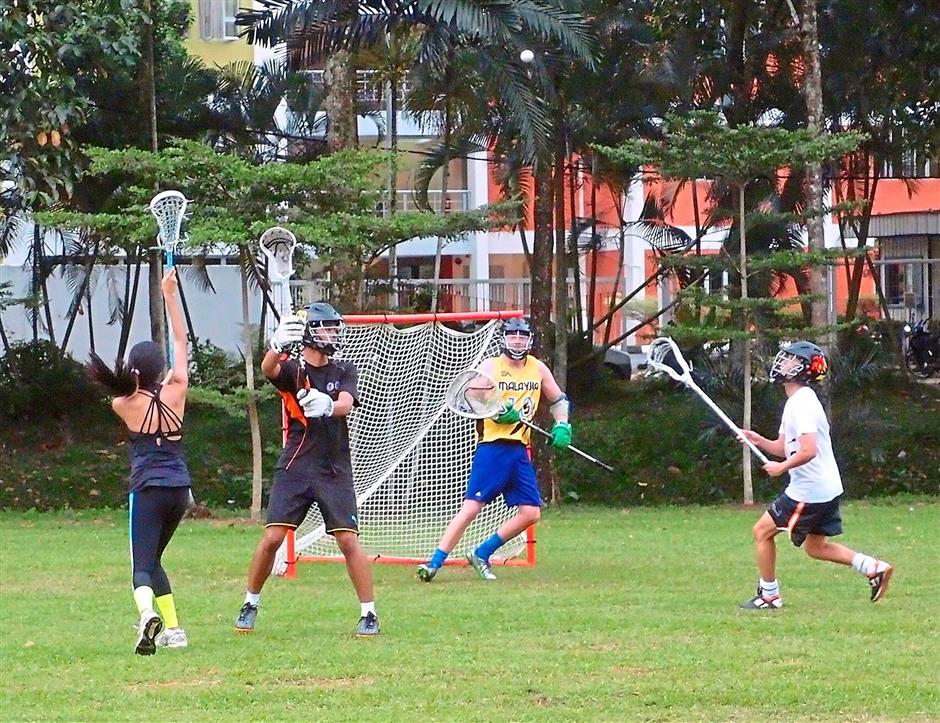
Lacrosse
Lacrosse is a contact team sport that originated from Native American culture. Teams of 10 players use lacrosse sticks, which are long and tipped with a mesh, to fling a small rubber ball into the opponent’s goal. Checking is permitted in men’s lacrosse, giving the sport a reputation for being rough. Men are required to wear helmets and a substantial amount of padding, but not women, as women’s lacrosse only permits stick checking, not body checking. The sport was introduced to Malaysia this year by the Malaysia Lacrosse Association.
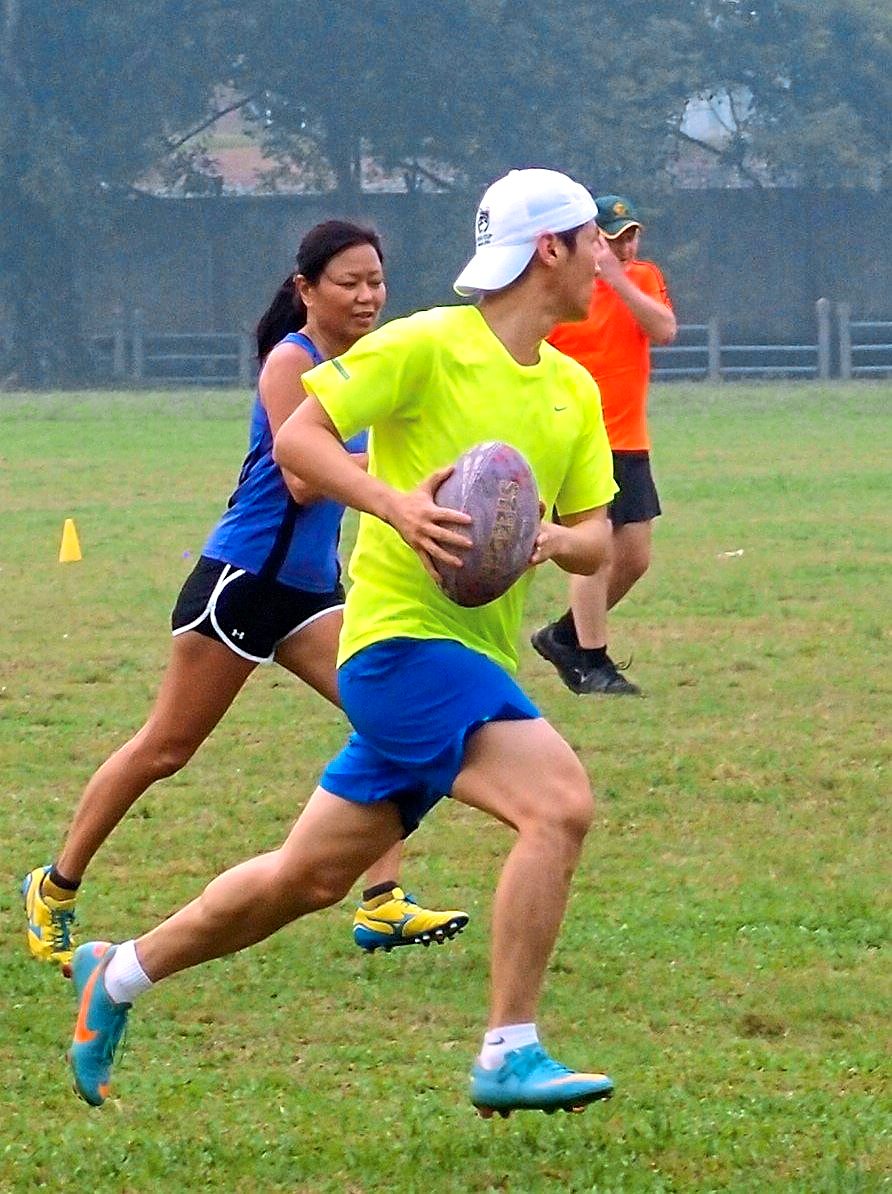
Touch Rugby
The popularity of touch rugby in Malaysia can be attributed to the fact that the sport can be played on almost any open field. Touch rugby is a limited-contact sport that can be played by mixed-gender teams of six. When touched by an opponent, a player must drop the ball for a teammate to pick up, and a team has a limited number of touches with which a try must be scored before a turnover occurs. There are no conversions or field goals in touch rugby. Malaysia is hosting the Federation of International Touch (FIT) World Cup in 2019.
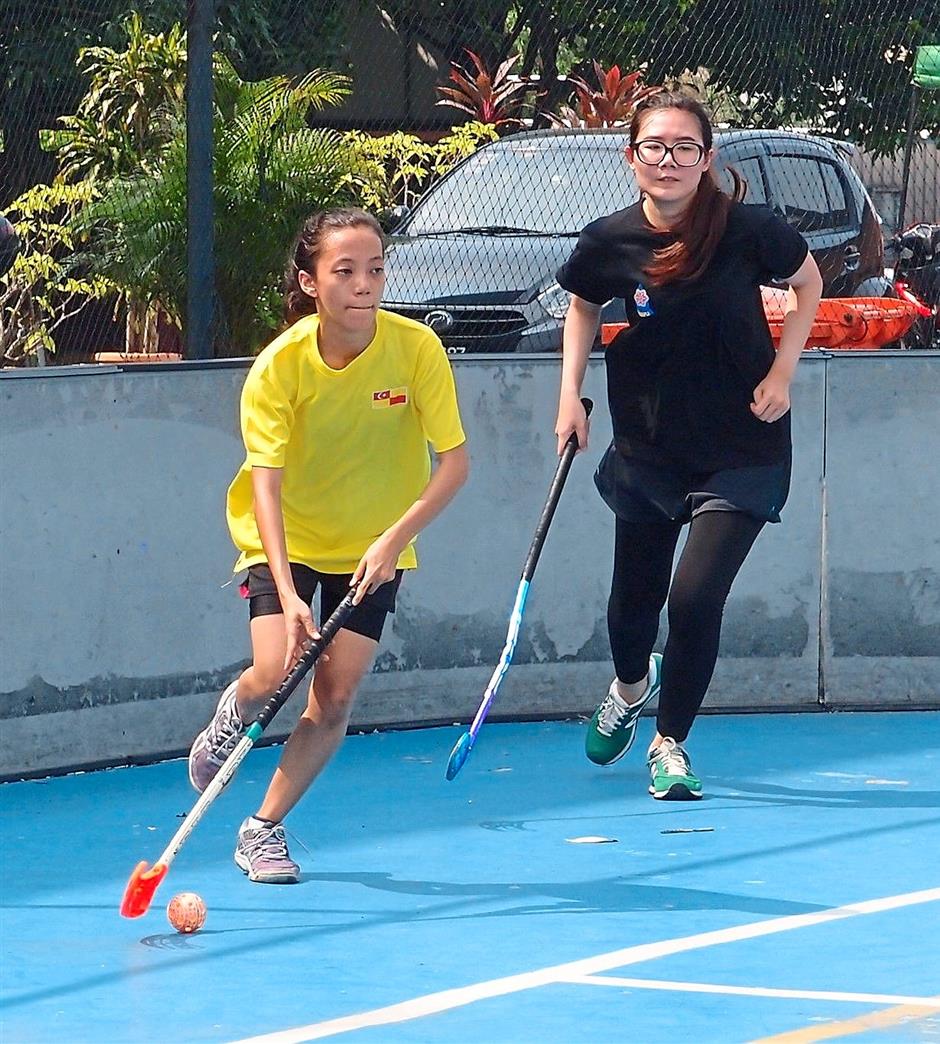
Floorball
Many people may not have heard of floorball, but the sport has a sizeable following in Malaysia. Floorball is a fast-paced hardcourt hockey played in an enclosed rink by teams of six, inclusive of a goalkeeper. Invented in Sweden, floorball is most popular in Europe, though it has since expanded worldwide, gaining IOC recognition in 2008. The Malaysian men’s floorball team saw some success at this year’s SEA Games in Singapore, taking home the bronze medal.
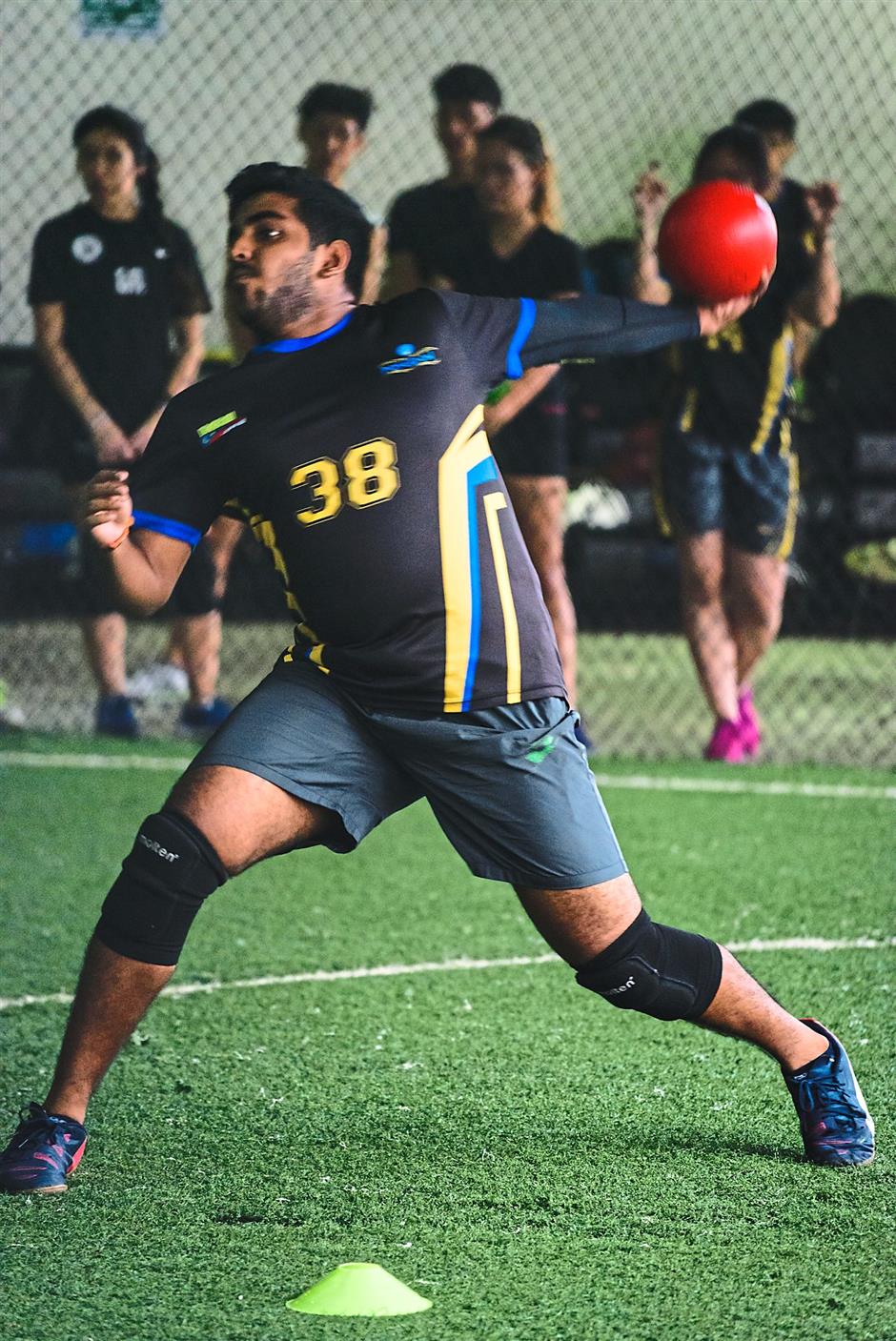
Dodgeball
Dodgeball in Malaysia was pretty much unheard of until the last decade. This is another sport that expanded through youth players and is quite popular with students. Malaysia achieved notable success at the Dodgeball World Championship in Las Vegas last month, taking second and third placing for the men’s and women’s teams, respectively, out of eight participating countries.
5 Woodball
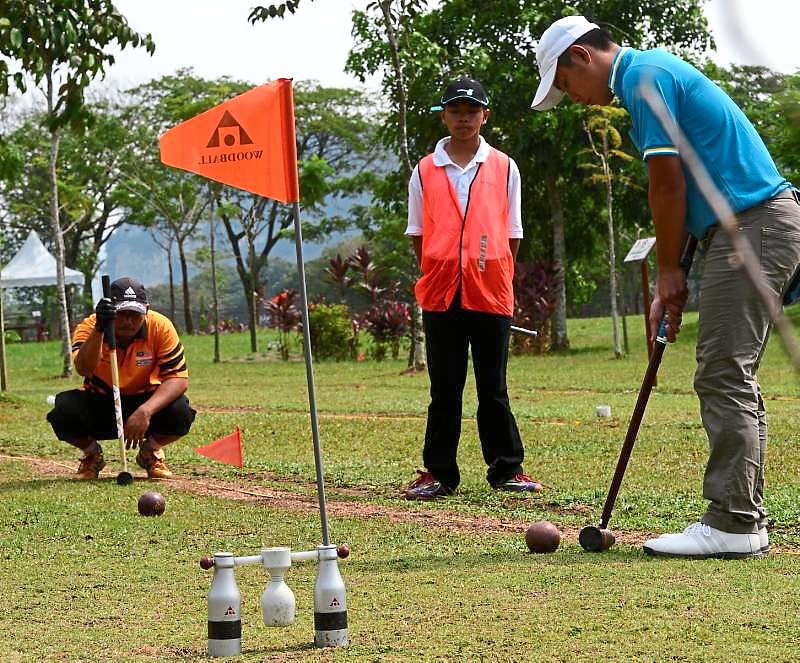
Unlike most of the other sports on this list, woodball is not new in Malaysia as it was introduced to the country by the Malaysian Woodball Association 20 years ago. The sport is similar to croquet, where players use mallets to hit a large wooden ball through a gate in the lowest number of shots. There are a number of woodball courses across the country, but the majority of them are located in Pahang, where woodball is most popular.
6 Inline Hockey
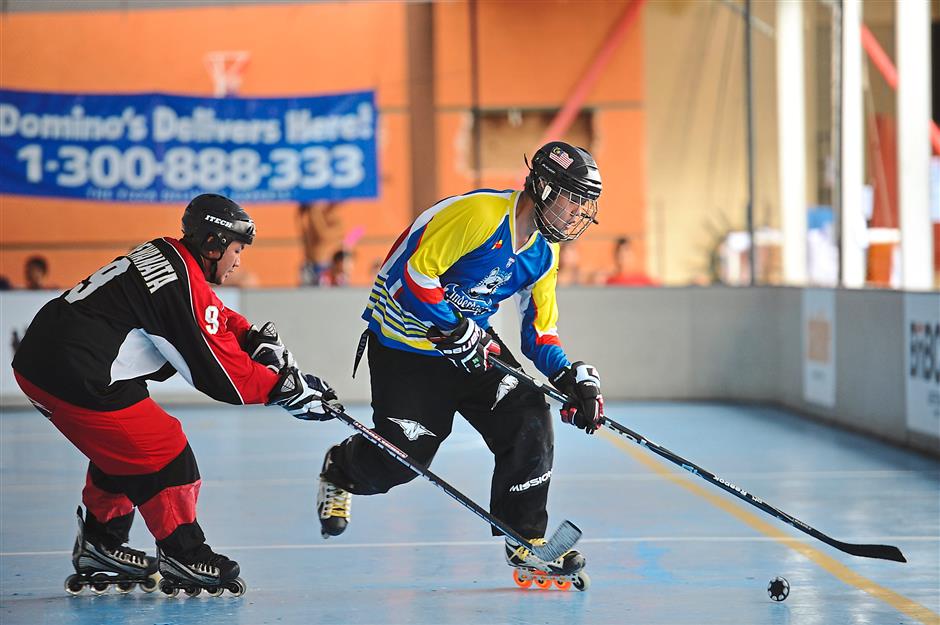
Inline hockey is essentially ice hockey played on hard surfaces on inline skates. Needless to say, the sport tends to be popular with ice hockey enthusiasts. However, ice hockey is more popular in Malaysia, despite the lack of ice- skating rinks for the sport. Players use the same type of hockey stick and padding, but the puck used in inline hockey is much lighter, made of plastic, and designed to have lower friction against the court surface.
Quidditch
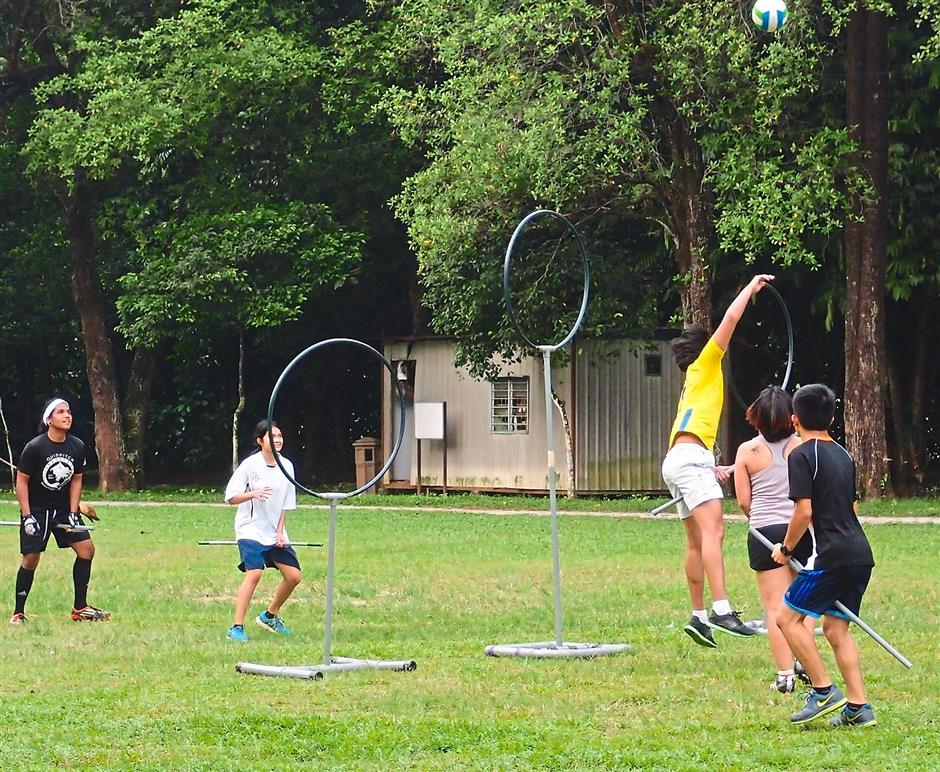
Fans of the Harry Potter books and movies will be very familiar with this one. The real-life version of Quidditch was only founded 10 years ago in the United States, but it is played worldwide by small groups. This limited-contact sport combines elements of handball and dodgeball, using a volleyball and three dodgeballs for gameplay. Similar to the fictional version of the sport, players must carry a broomstick between their legs as a form of handicap. Quidditch is unique in the sense that it has a mandatory mixed-gender rule for teams.
8 Speed Badminton
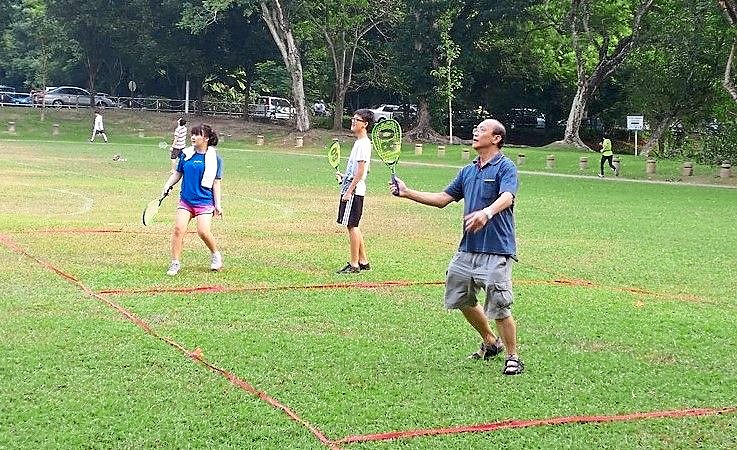
Despite the name, speed badminton is very different from badminton. The sport originated in Germany in 2001 and it can be played almost anywhere — indoors, open fields, flat rooftops and even beaches. Speed badminton racquets are similar to squash racquets but lighter, while the “speeders” used in the sport are heavier than shuttlecocks, with less wind resistance. There is no net and players play across two square courts separated by a wide space. Speed badminton is currently only played in Penang, but the following is steadily growing.
9 Jombola
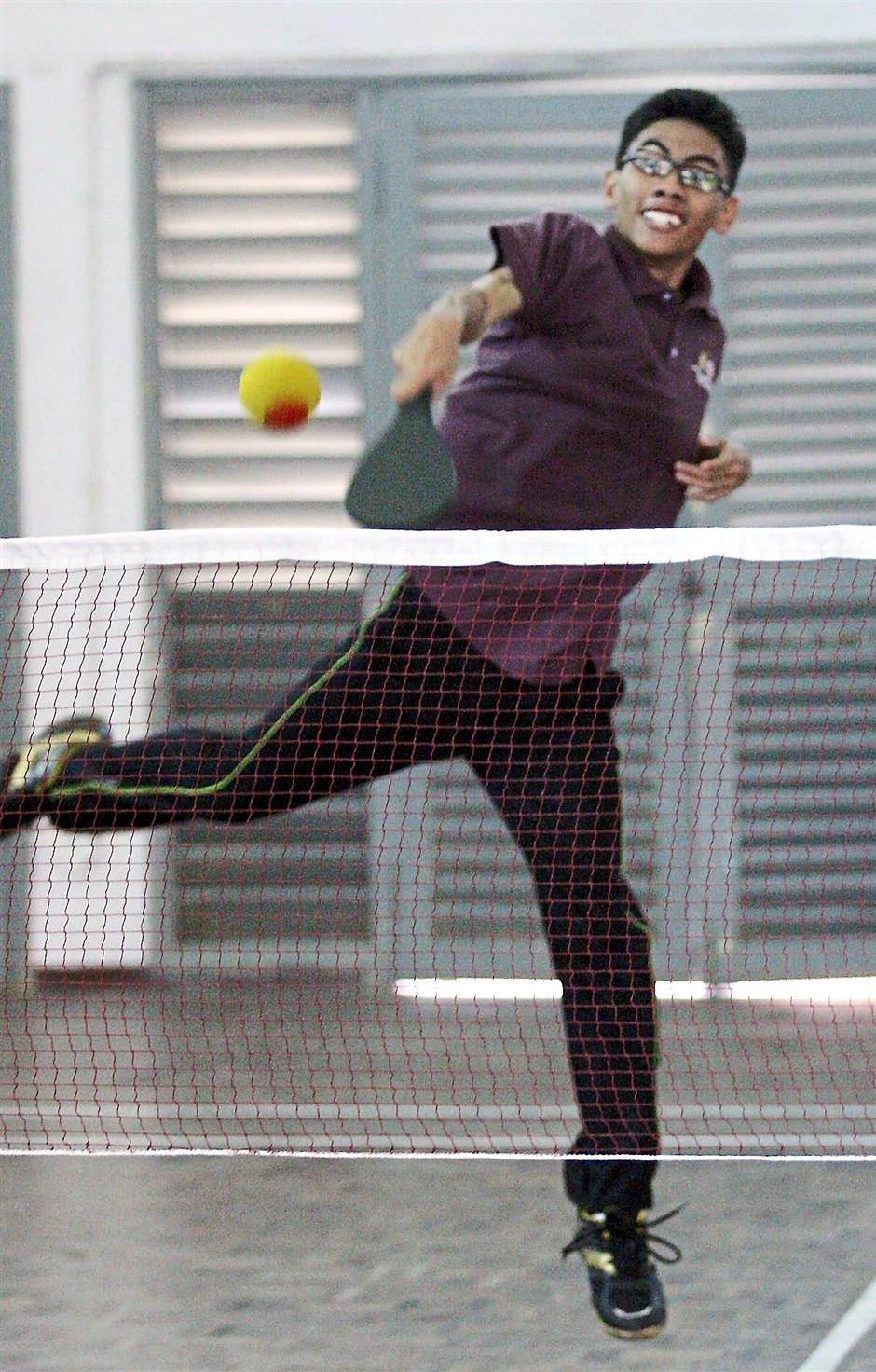
Jombola is the latest sport to have been invented by a Malaysian. Played on a badminton court with large wooden paddles (called racquets) and a specially developed foam ball, the sport combines elements of badminton, tennis and table-tennis. The sport is still quite new and being introduced through universities both local and abroad, but it is slowly building up a following.
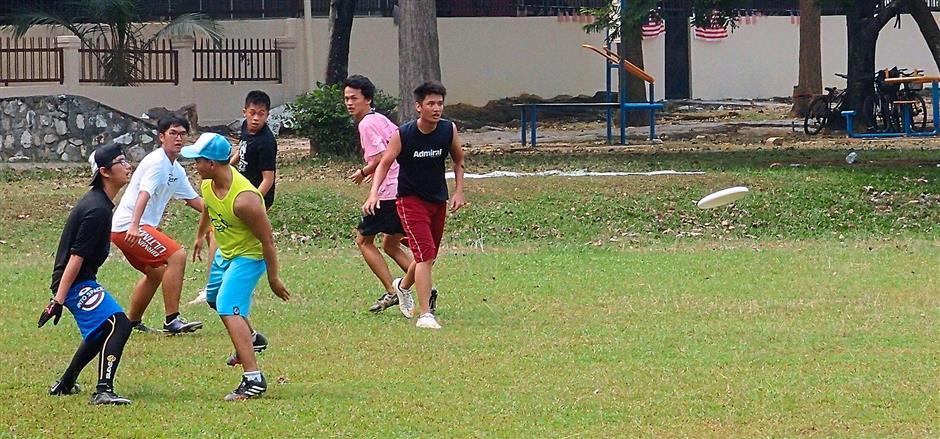
10 Ultimate Frisbee
Ultimate Frisbee is likely the most well-known and fastest growing sport worldwide on this list. This no-contact team sport pits teams of seven players against each other with the objective of getting the disc to a player in the opponent’s end zone. It is easy for new teams to pick up because all that is needed to start playing is a frisbee. The sport was officially recognised by the International Olympic Committee (IOC) in 2013.
Special thanks to the teams, groups and associations that gave their kind cooperation for this story and video.
About 10.000 years ago, the Orang Asli (comparable to Malay Aboriginals) left from southwest China to the peninsula we now call West-Malaysia. Until 1405 the following superpowers reigned over the peninsula; the Funan (Cambodia), the Srivijaya (Sumatra) and the Majapahit (Java). From 1405 onwards the Chinese influence in this area grew. In this period the Islamic way of thinking also set in when Arabic traders arrived. In a short period of time many people converted to this religion. From 1500 on the trade in Southeast Asia increased enormously. The European superpowers of that time acquired interest in the local resources, the era of trade over sea had started and Malaysia would play a big part in it.
Malaysia under British ruling
The Portuguese were the first to occupy Malacca (partly due to its perfect location). During the VOC-era (later the Dutch East Indies era) the Dutch seized power in Malacca in 1641. At first, the British didn't put much effort into Malacca, and established themselves on the island
Penang (1786). Only until 1795 the British took over command of the Dutch in Malacca, who started focusing more on trade all around Indonesia. It is said the Dutch traded 'Malaysia' for 'Indonesia'. The British Crown Colony (also referred to as the Straits Settlements) was established in 1826 and slowly but certain, the British increased their power over the rest of the peninsula. At first, it was primarily spices taken from the present Malaysia. But when in the early 19th century tin supplies were discovered, the trade shifted rapidly.
The British first colonized the peninsula and after that, between 1840 an 1882, also annexated east-Malaysia (Sabah and Sarawak) into the British Crown Colony. In this period, the British also invited many Indian people to Malaysia, to fill up the shortage of workers. After the Japanese occupation during World War II, the strive for independence grew among Malay people, this lead to a communist insurrection (1948-1960); 'The Emergency'. In 1948 the Federation of Malaya was founded. The Federation consisted of 11 states; nine Malay states and the British settlements of Penang and Malacca.
In 1948, an undeclared war on terror exploded in the jungles of Malaya. British and Malayan security forces fought a formidable guerilla army determined to create a Communist republic. They failed – but by the time the war ended 12 years later, tens of thousands of people had been killed, both combatants and civilians. Yet against this terrible background, Malayans from all races and classes joined together to form a new nation – independent Malaya. The Malayan Emergency was an education in fighting together – the crucible of independence.
Federation of Malaysia
In 1957 the British surrendered their sovereignty over Malaysia and the peninsula became independent that year with the name 'Federation of Malaysia'. A new federation with the name Malaysia was established on September 16th 1963 by the unity of Malaysia, Singapore and the east-Malaysian states Sabah and Sarawak on the north coast of Borneo. Directly after this, the Filipinos and Indonesia broke all their diplomatic relations, because they believed that some of these parts belonged to them. Indonesia started with the konfrontasi (confrontation); fishing-boats in front of Sarawak's coast were brought to sink and above Sabah the roaring of airplanes could be heard. But after Soekarnos disposal in 1966, the government made a treaty of peace with Malaysia and after that the Filipinos dropped their territory claims on Sabah too (though up to this day there is still an interest in the northern parts of Sabah).
In 1965 Singapore separated from the federation and became an independent state. The sultan of the oil state Brunei (located between the federal states Sabah and Sarawak), already made clear in the past that they opposed to any kind of unity with Malaysia.
The anti-government rallies of 2007
After the declaration of independence in 1957 Malaysia has developed itself quickly. With the 'Vision 2020' strategy carried out by former premier Mahathir, Malaysia jumps ahead as a economically and technologically well developed country. Last couples of years have been dominated by political disturbances. Two unauthorized anti-government rallies shook Malaysia's fundaments in November 2007. The first rally was organized to protest over corruption in the Malaysian electoral system. The second rally was organized by the Hindu Rights Action Force, to protest over discrimination against non-ethnic Malays (mainly Indian immigrants). Both rallies were condemned by the government and were put down fierce by the police. However, these rallies were the start of more political shifts.
Current political status
In March 2008 the biggest political party - Barisan Nasional (National Front) - in Malaysia experienced the biggest electoral loss ever in the country's history. This was a clear message addressed to Prime Minister Abdullah Badawi. A couple of weeks later the UMNO (part of Barisan Nasional) gathers to demand resignation of Abdullah Badawi. Former Prime Minister Mahathir is suspected to play a big role in this turn of events. Abdullah remained confident he was still the one to lead BN to better times.
Not long after these events former vice Prime Minister Anwar is free to join politics, after a 10 year ban of any political activities (due to acquisitions of corruptions and sodomy). He was the next Prime Minister in line after Mahathir, but due to his conviction Mahathir was succeeded by Abdullah Badawi. In May 2008 Mahathir leaves 'his' UMNO, to leave yet again a clear message. His actions are - unfortunately for him - not met with his hopes to cause a rift in the UMNO.
In June 2008 the Malay government raised fuel prices by 41% (Diesel to 63%), which causes sparks of anger throughout the country. Abdullah receives much criticism from out of his own party. As a result he decides to resign as Prime Minister, although he does not mention further details around his resignation. Soon after this it is clear that Najib Tun Razak will be the next Prime Minister of Malaysia (son of Malaysia's 2nd Prime Minister; Tun Abdul Razak). In July 2008 Najib Tun Razak is mentioned in connection with the death of a former top model. No action is being taken, although he was under investigation for a short while. Main political rival, Anwar, also appears in the spotlight. He is again being accused of sodomy, this time a 23 year old co-worker makes the allegation.
In April 2009 Prime Minister Abdullah Badawi resigns from politics, soon after Dr.M (Mahathir) joins UMNO again. Malaysia's new Prime Minister is Najib Tun Razak. He promises many changes, the question is whether he is capable of really taking Malaysia to the next level. He has the difficult task to make 'his' 1Malaysia happen. 1Malaysia is an on-going campaign announced by Najib calling for the cabinet, government agencies, and civil servants to emphasize ethnic harmony, national unity, and efficient governance. The eight values of 1Malaysia as articulated are perseverance, a culture of excellence, acceptance, loyalty, education, humility, integrity, and meritocracy. There will be new elections early 2013. Then we will see if Prime Minister Najib did enough to convince and please the 'Raykat' (the People).
In July 2011 a movement comprising of many organizations called Bersih 2.0 made plans to organize a demonstration in Kuala Lumpur to protest for fair elections during the upcoming elections. The government deemed the group illegal and bersih organizers did not get a permit which they needed to demonstrate. They did not gave up and proceeded with the preparations. At some point even the King played a part in the developments, advising government and bersih to come up with a peaceful solution. Both agreed, but soon after the government again dissalowed Bersih 2.0 to take place. The government put Kuala Lumpur in lockdown at Friday 8th of July midnight. At 9 July 2011 most of the roads leading to KL were blocked, people were frisked and car trunks were checked. Nonetheless well over 20.000 demonstrators made it into the city center before 11am. Even numerous opposition leaders made it to the meeting points, ignoring the fact that they were put on a list with people that weren't allowed in the city that day. Around 1pm the rally towards Stadium Merdeka started, but crowds moved slowly because of all the road blocks set up by police and special units. Things turned sour at 1.30pm when police starting to use water cannons and tear gas on the crowds. Around 4pm demonstrators declared Bersih2.0 a succes and the city turned back to normal

It remains the best-kept secret that Malaysia has a world-class effervescent and exciting nightlife jam-packed with flamboyant personalities and gorgeous women. With trendy bistros and hip clubs constantly revamping to keep up with demand, Malaysia’s nightlife continues to successfully fan the flames of the masses year after year.
It goes without saying that the best place to groove in Malaysia is the booming metropolis of Kuala Lumpur – the heart of the city. With plenty of entertainment options that range from sedate pubs, sophisticated clubs and trendy bistros, Kuala Lumpur easily satisfies its culturally diverse clientele.
There are many things and activities but we have listed 8 most popular things to do by the locals in Malaysia. Malaysia is a multi-cultural country with different races and everyone is enjoying what they love to do. Let us get started with the list below.
Activities Malaysian Love to do at Night
Some cyber cafe will have a
mamak stall (Indian food stall) just out of the cyber cafe, and ordering food and drinks is much more convenient for the gamers. Keep in mind this is not a very healthy activity after all.
5. Hanging out at the Mamak Stall
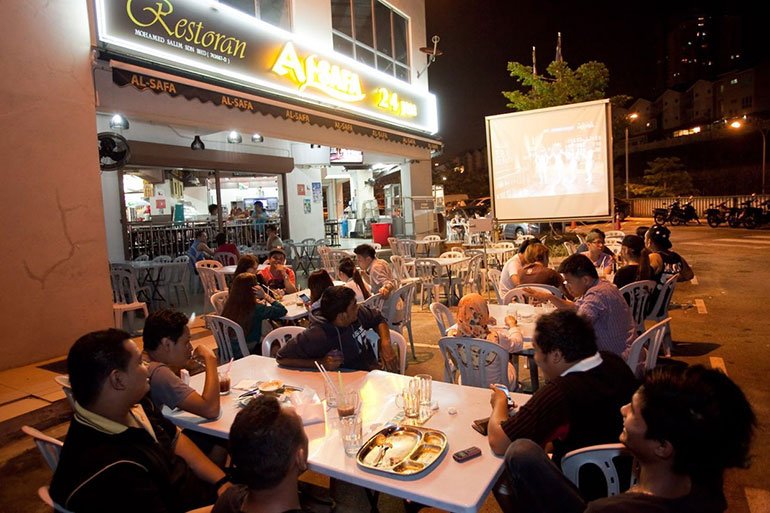
Mamak stall is everywhere in Malaysia, from roadside to shop lot. It is also the usual hang out place among the Malaysian. If you are a traveler, make get these most ordered
mamak foods in Malaysia –
Tandoori chicken,
mee mamak,
rojak,
naan,
Going to the gym is another way to stay healthy and balanced diet is also needed. Many locals are trying to stay healthy by going to the gym to workout to slim down or get fit. They can also attend extra classes such as body combat, Muay Thai, Yoga and more after their workout session. Some well-known fitness centres in Malaysia are Fitness First, Celebrity Fitness, True Fitness, CHI Fitness and just to name a few popular ones.
Singing Favorite Song at KTV
Going for a karaoke session is popular among the peoples in Malaysia. Some popular KTV joints like Neway Karaoke Box, Redbox, Loudspeaker and Reka Muhibbah is available throughout Malaysia.
It is much worth the money if you go in a group of 4 or more because you can share the bills and enjoy the night singing your heart out of your favorite karaoke songs along with friends. There are also tit-bits, snacks, drinks and also buffet promotion, just eat and sing till you drop!
Many Malaysian like to going sing karaoke at night hours because of the ‘
feel good‘ atmosphere, you have to try to experience it.
6. Listen to Live Music Band
There are many
best live music places with live band performances in Malaysia, the popular live venues are No Black Tie, Hard Rock Cafe, SOJU, Le Noir, Backyard Pub and Grill in Kuala Lumpur, Reggae Mansion Penang and just to name a few.
Many locals and foreigners hang out at the bars to enjoy drinks and live music from relaxing evening Jazz, Top 40 to Rock music. It is a good way to spend the night if you can’t find things to do.
7. Attend a Live Concert
Malaysian are willing to spend some amount of money for VIP seat just to watch their favorite singer and superstar at a concert. Attending a live concert on the weekend is also one of the nightlife activity for Malaysian.
8. Massage / Health Spa
Ahh, feeling tired and body aching? Massage is all you need. From sauna, foot reflexology to full body massage, it is one of the most popular activities in Malaysia.
Many locals spend their time at the
massage health spa in Kuala Lumpur because of the affordable and cheap rate from as low as RM38 while relaxing their soul and body after hectic work.
One of the most popular spas in Kuala Lumpur is Lavish Spa, located in Fahrenheit Bukit Bintang Kuala Lumpur, equipped with lounges, cinema room, jacuzzi, swimming pool and many more. Other spas are Ossoto, Hammam and just to name a few. Normally a person will spend at least 1-2 hours at the health spa depends on the service they take.
If you are the kind of person who is a little laidback and just wants to chill out, our best activities to do on weekends is the right guide for you.

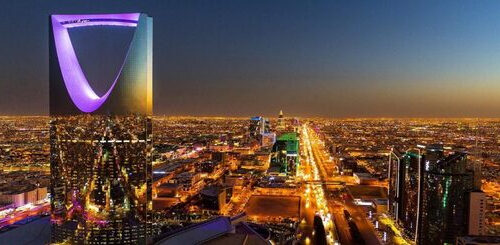
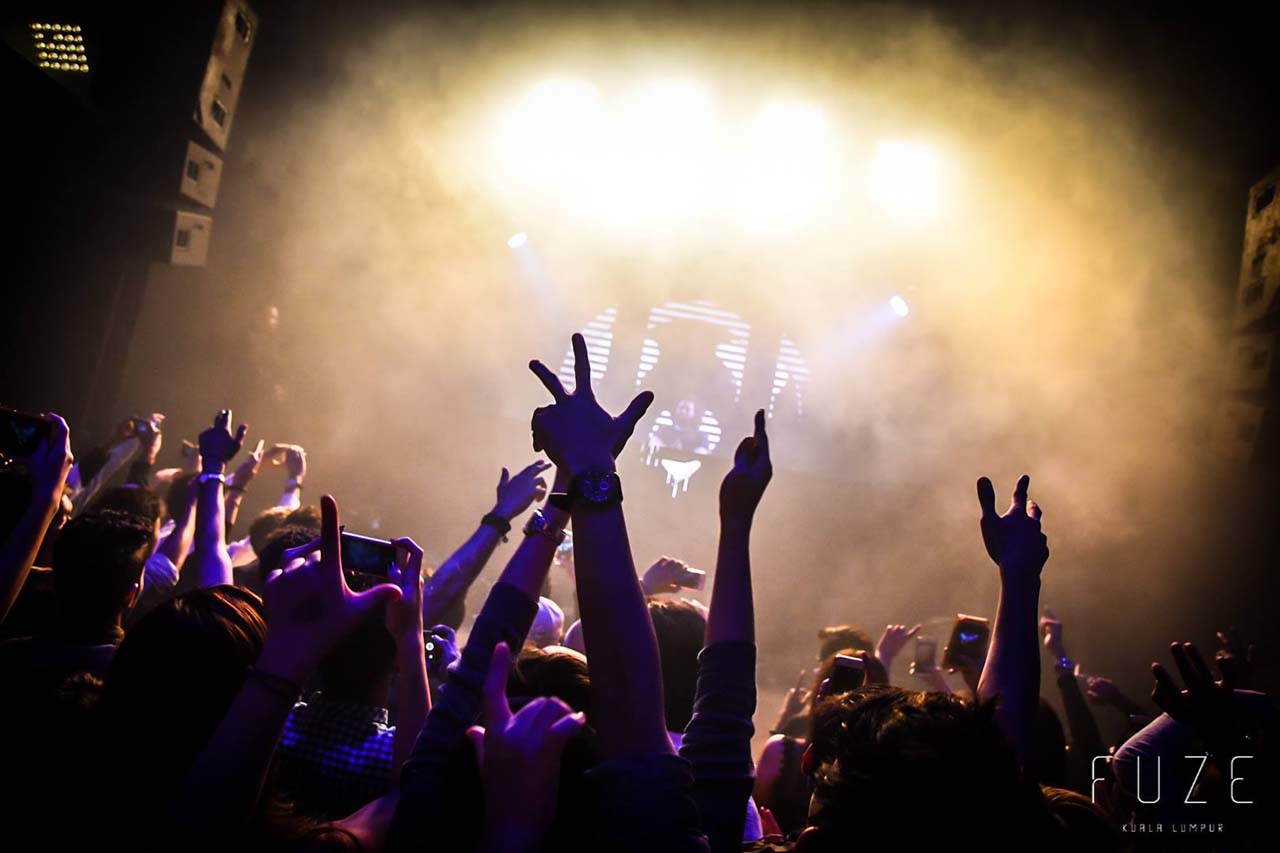 Clubbing or club hopping is popular among the locals & foreigners who are working, studying or having holidays in Malaysia. Many Malaysian youngsters age around 18 to 28 love to go to the best clubs & bars to enjoy good music, watching their favorite international guest DJ spinning the hottest dance songs and even just to have a fun night out with friends.
In the club, you can meet new friends but of course, you still need to take the precaution of the danger of making friends with strangers, no matter if you are a guy or girl. Do check out our nightclub guide that might help you discover the things you shouldn’t do in the club.
Clubbing or club hopping is popular among the locals & foreigners who are working, studying or having holidays in Malaysia. Many Malaysian youngsters age around 18 to 28 love to go to the best clubs & bars to enjoy good music, watching their favorite international guest DJ spinning the hottest dance songs and even just to have a fun night out with friends.
In the club, you can meet new friends but of course, you still need to take the precaution of the danger of making friends with strangers, no matter if you are a guy or girl. Do check out our nightclub guide that might help you discover the things you shouldn’t do in the club.
 Going out for a midnight movie is another popular night activities among Malaysian. Normally movie goers will book their movie tickets in advance so that they will get a good seating and a good view in the cinema.
New movies will premiere every Thursday night, moviegoers will either book tickets via the cinema’s website or through the app. Some of the popular cinemas in Malaysia including TGV, GSC and MBO. Some movie lovers are willing to spend a little more to enjoy watching their favorite movies presented in the amazing sound system Dolby Atmos & D-Box. Don’t forget the popcorn, drinks and the delicious hot-dog with chili sauce!
Going out for a midnight movie is another popular night activities among Malaysian. Normally movie goers will book their movie tickets in advance so that they will get a good seating and a good view in the cinema.
New movies will premiere every Thursday night, moviegoers will either book tickets via the cinema’s website or through the app. Some of the popular cinemas in Malaysia including TGV, GSC and MBO. Some movie lovers are willing to spend a little more to enjoy watching their favorite movies presented in the amazing sound system Dolby Atmos & D-Box. Don’t forget the popcorn, drinks and the delicious hot-dog with chili sauce!
 Adult aged around 26 and above might have different interest in hobby and activities than the youngsters. Party games or dart games became popular few years ago, and we can see some Malaysian rather go to the nearest bars & pubs to play dart game, pool and snooker.
It was a much more relaxing environment than going to a dance club. You can have good cold drinks, listen to music, chatting or even have a business conversation with friends or boss. Just chill out.
Adult aged around 26 and above might have different interest in hobby and activities than the youngsters. Party games or dart games became popular few years ago, and we can see some Malaysian rather go to the nearest bars & pubs to play dart game, pool and snooker.
It was a much more relaxing environment than going to a dance club. You can have good cold drinks, listen to music, chatting or even have a business conversation with friends or boss. Just chill out.
 Hanging out at internet cafe (we call it cyber cafe or CC in Malaysia) is popular night activities listed in our list. A lot of Malaysian who love to play online games like Dota 2 or any other online games will lepak (hangout) at the internet cafe.