India, country that occupies the greater part of South Asia. It is a constitutional republic consisting of 29 states, each with a substantial degree of control over its own affairs; 6 less fully empowered union territories; and the Delhi national capital territory, which includes New Delhi, India’s capital. With roughly one-sixth of the world’s total population, India is the second most-populous country, after China.
OFFICIAL NAME
Bharat (Hindi); Republic of India (English)
FORM OF GOVERNMENT
multiparty federal republic with two legislative houses (Council of States [2451]; House of the People [5452])
HEAD OF STATE
President: Ram Nath Kovind
HEAD OF GOVERNMENT
Prime Minister: Narendra Modi
CAPITAL
New Delhi
OFFICIAL LANGUAGES
Hindi; English
OFFICIAL RELIGION
none
MONETARY UNIT
Indian rupee ₨3
CURRENCY EXCHANGE RATE
1 USD equals 71.078 Indian rupee
POPULATION
(2019 est.) 1,387,037,000
TOTAL AREA (SQ MI)
1,222,550
TOTAL AREA (SQ KM)
3,166,391
URBAN-RURAL POPULATION
Urban: (2018) 34%
Rural: (2018) 66%
LIFE EXPECTANCY AT BIRTH
Male: (2017) 67.6 years
Female: (2017) 70.1 years
LITERACY: PERCENTAGE OF POPULATION AGE 15 AND OVER LITERATE
Male: (2015) 81.4%
Female: (2015) 60.9%
GNI PER CAPITA (U.S.$)
(2017) 1,800
1Includes 12 members appointed by the president.
2Includes 2 Anglo-Indians appointed by the president.
3The first symbol for the rupee was officially approved in July 2010, and coins and banknotes with the new symbol began being issued in late 2011.
It is known from archaeological evidence that a highly sophisticated urbanized culture—the Indus civilization—dominated the northwestern part of the subcontinent from about 2600 to 2000 BCE. From that period on, India functioned as a virtually self-contained political and cultural arena, which gave rise to a distinctive tradition that was associated primarily with Hinduism, the roots of which can largely be traced to the Indus civilization. Other religions, notably Buddhism and Jainism, originated in India—though their presence there is now quite small—and throughout the centuries residents of the subcontinent developed a rich intellectual life in such fields as mathematics, astronomy, architecture, literature, music, and the fine arts.
IndiaEncyclopædia Britannica, Inc.
Throughout its history, India was intermittently disturbed by incursions from beyond its northern mountain wall. Especially important was the coming of Islam, brought from the northwest by Arab, Turkish, Persian, and other raiders beginning early in the 8th century CE. Eventually, some of those raiders stayed; by the 13th century much of the subcontinent was under Muslim rule, and the number of Muslims steadily increased. Only after the arrival of the Portuguese navigator Vasco da Gama in 1498 and the subsequent establishment of European maritime supremacy in the region did India become exposed to major external influences arriving by sea, a process that culminated in the decline of the ruling Muslim elite and absorption of the subcontinent within the British Empire.
The Taj Mahal in Agra, India, one of the world's great architectural masterpieces.Brand X Pictures/Jupiterimages
Direct administration by the British, which began in 1858, effected a political and economic unification of the subcontinent. When British rule came to an end in 1947, the subcontinent was partitioned along religious lines into two separate countries—India, with a majority of Hindus, and Pakistan, with a majority of Muslims; the eastern portion of Pakistan later split off to form Bangladesh. Many British institutions stayed in place (such as the parliamentary system of government); English continued to be a widely used lingua franca; and India remained within the Commonwealth. Hindi became the official language (and a number of other local languages achieved official status), while a vibrant English-language intelligentsia thrived.
ADVERTISEMENT
India remains one of the most ethnically diverse countries in the world. Apart from its many religions and sects, India is home to innumerable castes and tribes, as well as to more than a dozen major and hundreds of minor linguistic groups from several language families unrelated to one another. Religious minorities, including Muslims, Christians, Sikhs, Buddhists, and Jains, still account for a significant proportion of the population; collectively, their numbers exceed the populations of all countries except China. Earnest attempts have been made to instill a spirit of nationhood in so varied a population, but tensions between neighbouring groups have remained and at times have resulted in outbreaks of violence. Yet social legislation has done much to alleviate the disabilities previously suffered by formerly “untouchable” castes, tribal populations, women, and other traditionally disadvantaged segments of society. At independence, India was blessed with several leaders of world stature, most notably Mohandas (Mahatma) Gandhi and Jawaharlal Nehru, who were able to galvanize the masses at home and bring prestige to India abroad. The country has played an increasing role in global affairs.
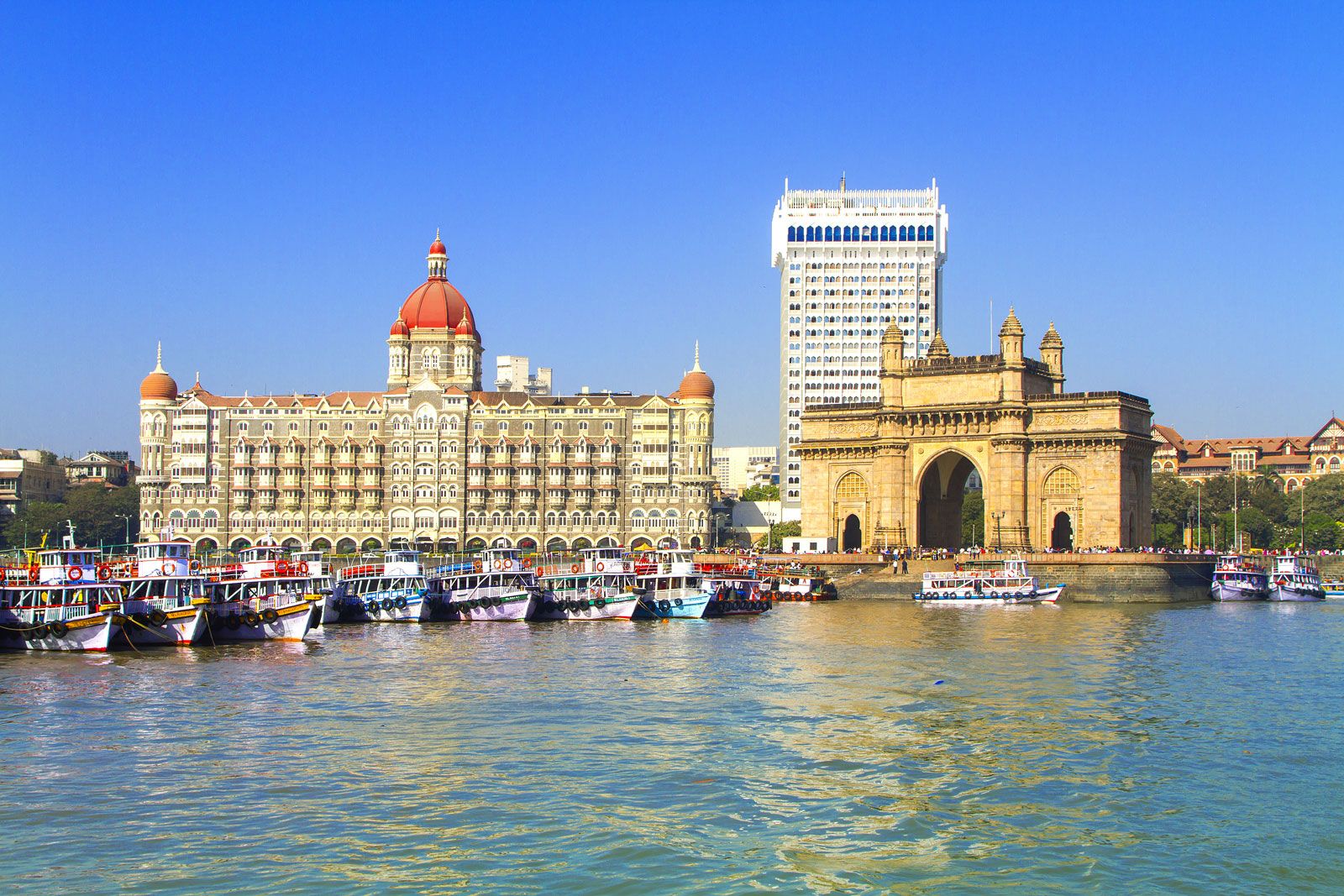
Contemporary India’s increasing physical prosperity and cultural dynamism—despite continued domestic challenges and economic inequality—are seen in its well-developed infrastructure and a highly diversified industrial base, in its pool of scientific and engineering personnel (one of the largest in the world), in the pace of its agricultural expansion, and in its rich and vibrant cultural exports of music, literature, and cinema. Though the country’s population remains largely rural, India has three of the most populous and cosmopolitan cities in the world—Mumbai (Bombay), Kolkata (Calcutta), and Delhi. Three other Indian cities—Bengaluru (Bangalore), Chennai (Madras), and Hyderabad—are among the world’s fastest-growing high-technology centres, and most of the world’s major information technology and software companies now have offices in India.
The history section of the articles Pakistan and Bangladesh discuss those countries since their creation.
Joseph E. SchwartzbergThe Editors of Encyclopaedia Britannica
Land
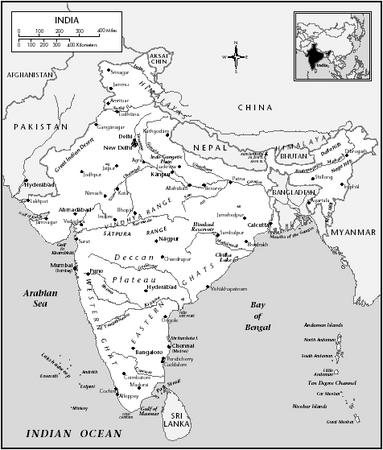
India’s frontier, which is roughly one-third coastline, abuts six countries. It is bounded to the northwest by Pakistan, to the north by Nepal, China, and Bhutan; and to the east by Myanmar (Burma). Bangladesh to the east is surrounded by India to the north, east, and west. The island country of Sri Lanka is situated some 40 miles (65 km) off the southeast coast of India across the Palk Strait and Gulf of Mannar.
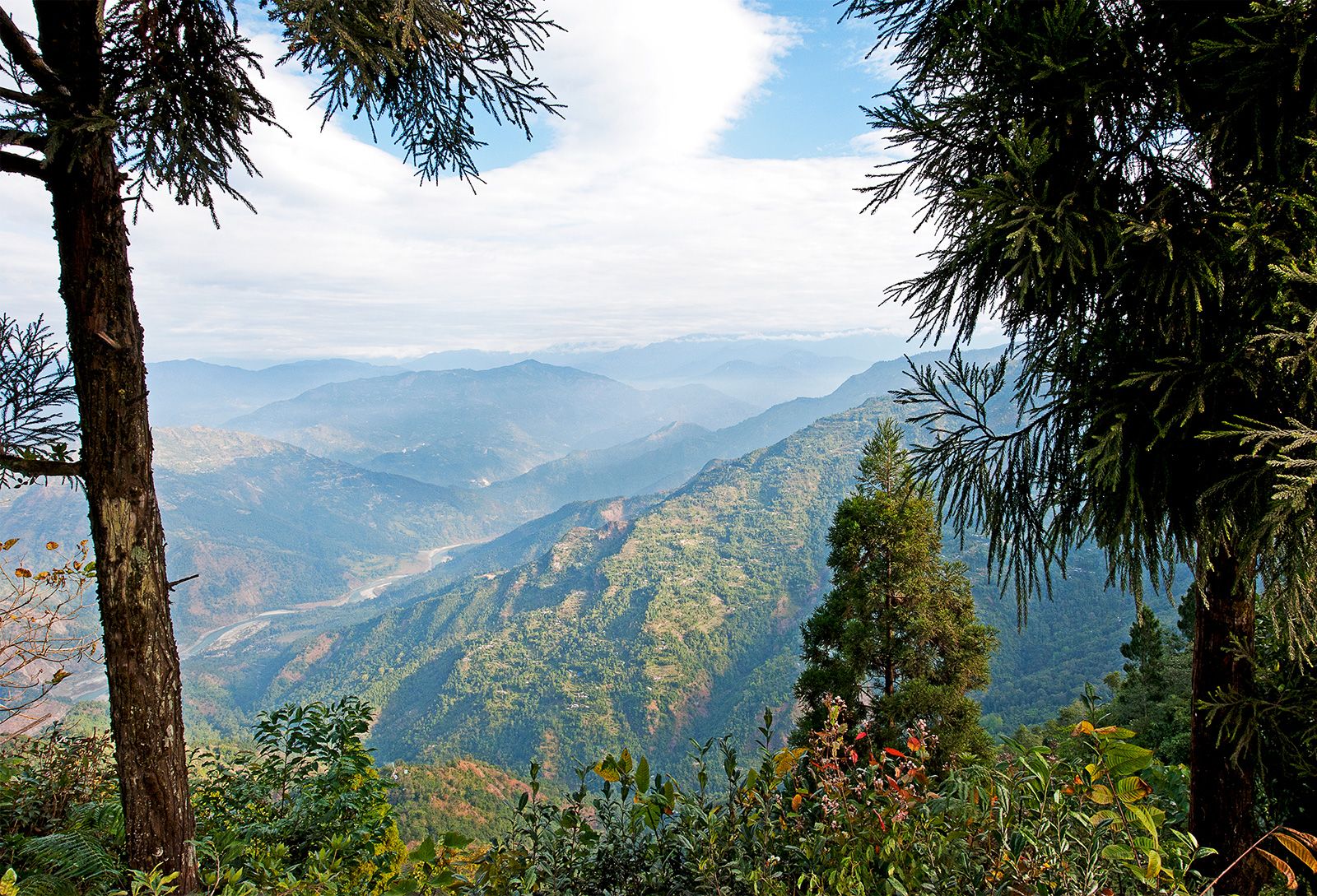
Himachal Pradesh, India: Kullu ValleySettlement in the Kullu Valley, central Himachal Pradesh, India.The Holton Collection/SuperStock
The land of India—together with Bangladesh and most of Pakistan—forms a well-defined subcontinent, set off from the rest of Asia by the imposing northern mountain rampart of the Himalayas and by adjoining mountain ranges to the west and east. In area, India ranks as the seventh largest country in the world.
Much of India’s territory lies within a large peninsula, surrounded by the Arabian Sea to the west and the Bay of Bengal to the east; Cape Comorin, the southernmost point of the Indian mainland, marks the dividing line between those two bodies of water. India has two union territories composed entirely of islands: Lakshadweep, in the Arabian Sea, and the Andaman and Nicobar Islands, which lie between the Bay of Bengal and the Andaman Sea.
Relief
It is now generally accepted that India’s geographic position, continental outline, and basic geologic structure resulted from a process of plate tectonics—the shifting of enormous, rigid crustal plates over the Earth’s underlying layer of molten material. India’s landmass, which forms the northwestern portion of the Indian-Australian Plate, began to drift slowly northward toward the much larger Eurasian Plate several hundred million years ago (after the former broke away from the ancient southern-hemispheric supercontinent known as Gondwana, or Gondwanaland). When the two finally collided (approximately 50 million years ago), the northern edge of the Indian-Australian Plate was thrust under the Eurasian Plate at a low angle. The collision reduced the speed of the oncoming plate, but the underthrusting, or subduction, of the plate has continued into contemporary times.
Sport in India
India has a great tradition of sports, and is greatly influenced by the British presence in India in the 18th and 19th century. Cricket is undoubtedly the most popular sport, but in such a large and populous country there are many other sports that are played by a lot of people.
India is one of the largest country in the world in both area and population. India is also one of the few countries that have retained the popularity of their indigenous games among its people. Games like gilli-danda, kabaddi, pehlwani and kho kho. India is also where some of the oldest forms of martial arts originated like musti yuddha, kalerippayattu, silambam as well as marma adi. India also have a few board games, most popular of which is the chaturanga, believed to be the origin of modern chess. This is further reinforced with the rise of a number of chess grandmasters from the country.
However, modern games have also taken over the Indian scene with cricket being the most popular. India have also hosted several sporting events such as the Asian Games (1951 and 1982), Cricket World Cup (1987, 1996 and 2011), Hockey World Cup and the Commonwealth Games (2010).
India also have been part of the Olympic Games since 1900 and winning an Olympic medal right off the bat when Norma Pritchard took two silver medals in athletics when in the 200 meter dash and the 200 meters hurdles. They skipped a few Games and returned in 1920 and have been sending athletes ever since.
Below are details of sports, sporting events and sports people related to India.
Popular sports of India :
Cricket, Field Hockey, Football (Soccer), Badminton, Tennis, Kabaddi, Track and Field (Athletics), Chess
Traditional or Regional Sports of India
Ball Badminton - a racket game native to India, played with a yellow ball made of wool, with similarities to Badminton.
Kho-Kho - the team that takes lesser time to tag all the opponent players wins the game.
Kabaddi - a "raider" enters the opposite team's half to tag opponents without taking a breath.
Lagori — from Southern India, this game involves a ball and a pile of flat stones. A member of one team throws a soft ball at a pile of stones to knock them over, then try to restore the pile of stones while the opposing team throws the ball at them (also called Pittu).
Yubi Lakpi — a seven-a-side traditional football game with similarities to rugby played in Manipur, India, using a coconut.
Mallakhamba — a traditional Indian sport, where athletes perform various types of gymnastics moves and hold various poses on a vertical wooden pole or a rope.
Rollball — like handball on roller skates, players must bounce the ball while moving and score goals by shooting the ball into the opposing team's goal.
Throwball — a sport very similar to Newcomb Ball (a variation of Volleyball) that is played in India.
Pehlwani — a form of wrestling from South Asia. A win is achieved by pinning the opponent's shoulders and hips to the ground simultaneously.
Kalaripayattu — an ancient martial art from Kerala, India.
Gilli-Danda — a South Asian game played with two sticks, one long and the other short
Nadan Panthu Kali — ball and net sport played in Kerala region.
India Sporting Success
India won the ICC Cricket World Cup in 1983 and 2011.
winner 2007 T20 World Cup
ICC Champions Trophy winner - 2002, 2013
Athletes from India
Sachin Tendulkar (cricket)
Virat Kohli (cricket)
Major Dhyan Chand (hockey)
Anju Bobby George (athletics - long jump)
Jyotirmoyee Sikdar (athletics - 800m)
Milkha Singh
Norman Pritchard
P. T. Usha
T. C. Yohannan
Leander Paes and Mahesh Bhupati (tennis)
Mary Kom (boxing) - one of the greatest female boxers of all time
India Sports trivia
1997 Federation Cup Semi Final between East Bengal and Mohun Bagan holds the record for the largest audience in Indian football. The match played in 13th July, 1997 at Salt Lake Stadium drew 134,000 spectators. This is a record attendance for any sport in India.
The sport of Badminton (probably) originated in India.
India at major events
India at the Summer Olympics
India at the Winter Olympics
India at the Commonwealth Games
India at the FIFA World Cup
India at the Cricket World Cup
Past sporting events hosted in India
1934 West Asian Games, New Delhi
1951 Asian Games
1982 Asian Games
1987 Cricket World Cup hosted by India & Pakistan
1996 Cricket World Cup hosted by India, Pakistan & Sri Lanka
2010 Commonwealth Games Delhi
2011 Cricket World Cup hosted in Bangladesh, India, Pakistan & Sri Lanka
2013 Lusophony Games in Goa
2018 Men's Hockey World Cup in Bhubaneswar
Upcoming sporting events in India
2023 Men's Hockey World Cup in Bhubaneswar & Rourkela
Annual sporting events held in India
Indian Premier League (IPL) - 20/20 Cricket tournament
Sporting Facilities in India
Netaji Subhas National Institute of Sports
Salt Lake Stadium Kolkata
Jawaharlal Nehru Stadium, New Delhi
Culture Name
Indian, Hindu, Bharati
Orientation
Identification. India constitutes the largest part of the subcontinental land mass of South Asia, an area it shares with six other countries, including Nepal, Pakistan, and Bangladesh. It has highly variable landforms, that range from torrid plains, tropical islands, and a parched desert to the highest mountain range in the world.
Location and Geography. India, on the southern subcontinent of Asia, is bounded on the northwest by Pakistan; on the north by China and Tibet, Nepal and Bhutan; on the northeast by Bangladesh and Burma (Myanmar); and on the southwest and southeast by the Indian Ocean, with the island republics of Sri Lanka and the Maldives to the south. Excluding small parts of the country that are currently occupied by Chinese or Pakistani military forces, the area of the Republic of India is 1,222,237 square miles (3,165,596 square kilometers).
Demography. The 1991 census enumerated 846,302,688 residents, including 407,072,230 women, and 217 million people defined as urban dwellers. However, with a population growth rate estimated at 17 per one thousand in 1998, by May 2000 the national figure reached one billion. Life expectancy in the 1991 census was sixty years, and in 1997 it was estimated that almost 5 percent of the population was age 65 or older. The population is still primarily rural, with 73 percent of the population in 1997 living outside the cities and towns. In 1991, the largest urban centers were Bombay or Mumbai (12,596,243), Calcutta or Kolkata (11,021,915), Delhi (8,419,084), Madras or Chennai (5,421,985), Hyderabad (4,253,759), and Bangalore (4,130,288).
Linguistic Affiliations. There are four major language families, each with numerous languages. Indo-Aryan, a branch of Indo-European, covers the northern half of the country, and the Dravidian family covers the southern third. In the middle regions a number of tribal languages of the Munda or Austroasiatic family are spoken. In the northeastern hills, numerous Tibeto-Burman languages are spoken.
Symbolism. The national flag, which was adopted in 1947, is a tricolor of deep saffron, white, and green, in horizontal bands (with green at the bottom). In the center of the white band is a blue wheel, the chakra , which also appears on the lion column-capital of the Emperor Asoka at Sarnath. This carving, which is over 2,200 years old, is also a national emblem that is preserved in the Sarnath Museum. The sandstone carving features four lions back to back, separated by wheels ( chakra , the wheel of law), standing over a bell-shaped lotus. The whole carving once was surmounted by the wheel of law. The national anthem is a song composed by Rabindranath Tagore in 1911 entitled Jana-gana mana. The nearly useless Saka-era calendar also may be considered a national symbol, adopted in 1957 and still often used officially alongside the Gregorian calendar.
History and Ethnic Relations
Emergence of the Nation. India has a history going back thousands of years and a prehistory going back hundreds of thousands of years. There was a long phase of Paleolithic hunting and gathering cultures parallel in time and characteristics with the Paleolithic peoples of Europe and East Asia. This was followed, eight thousand to ten thousand years ago, by the development of settled agricultural communities in some areas.
In 2700 B.C.E. , the first genuinely urban civilization in the Indus Valley and western India
India
emerged. After its disappearance around 1500 B.C.E. , there was a bewildering variety of princely states and kingdoms, small and large, throughout the subcontinent, creating a long history of war and conquest that was punctuated by foreign invasions and the birth of some of the world's largest religions: Buddhism, Jainism, Hinduism, and Sikhism.Despite the extent of the Empire of Asoka (272–232 B.C.E. ) and the Mughal Empire (1526–1707), it was left to the last foreign invaders, the British, to establish a unified empire that covered most of the subcontinent during its final century.
India was ruled by the British government after 1858 through a viceroy and a council, although several hundred "princely states" continued to maintain a measure of independence. The Indian National Congress, founded in 1885, slowly moved from a position of advisor and critic for the British administration toward demanding the transference of power to native Indian politicians. In 1930, the Indian National Congress, led by Jawaharlal Nehru and Mahatma Gandhi, adopted a policy of civil disobedience with a view to achieving full national independence. It was to be a long struggle, but independence was achieved in 1947, with the condition that predominantly Muslim areas in the north would form a separate country of Pakistan. Mohammed Ali Jinnah was to be Pakastani's first prime minister, while Nehru became the prime minister of the Republic of India. The departure of the colonial authorities, including the British armed forces, was peaceful, but the splitting off of Pakistan caused a massive population movement and bloodshed on both sides as a result of "communal passions." A quarter century later, the eastern wing of Pakistan split from that country to become the independent country of Bangladesh.
National Identity. National identity is not a major political issue; regional identity and the mother tongue seem to be more important. There are still millions of illiterate people who seem hardly aware that they are Indians but can be vociferous in their support of chauvinistic regional politicians. Thus, India has been plagued with secessionist struggles since independence, the most prominent of which have been a Dravidistan movement in the south, an armed struggle among Kashmiri Muslims for a union of their state with Pakistan, a Khalistan movement among Panjabi Sikhs, and a guerilla movement seeking independence for all the Naga tribes in the northeast.
Ethnic Relations. India is home to several thousand ethnic groups, tribes, castes, and religions. The castes and subcastes in each region relate to each other through a permanent hierarchical structure, with each caste having its own name, traditional occupation, rank, and distinctive subculture. Tribes usually do not have a caste hierarchy but often have their own internal hierarchical organization. The pastoral and foraging tribes are relatively egalitarian in their internal organization.
India is no stranger to ethnic conflict, especially religious wars. Nevertheless, in most parts of the
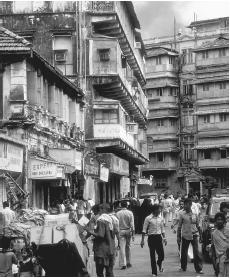
Indian shop workers in the main bazaar in Jaipur, Rajasthan.
country there has long been a local intercaste and intertribal economy that commonly is based on barter or the exchange of goods and services; since this system has satisfied economic necessities at least partially, ethnic conflict commonly has been dampened or kept under control because of the mutual benefits these economic arrangements provide.
Urbanism, Architecture, and the Use of Space
In the Indus civilization of 2700 to 1500 B.C.E. , India developed one of the earliest urban societies in the world, along with an extensive trading economy to support it.
The walled citadels in some early cities developed into elaborate palisades, walls, and moats to protect the multitude of Iron Age and medieval cities throughout much of the country. The towns and cities are of eight historic types: (1) ancient pilgrimage centers, such as Madurai; (2) local market towns, roughly one every 20 miles; (3) medieval fortified towns, such as Gwalior; (4) ancient and medieval seaports, such as Bharuch (Broach); (5) military cantonments first set up by the British, such as Pune; (6) modern administrative centers such as New Delhi; (7) new industrial centers, such as Jamshedpur; and (8) great modern metropoles such as Bombay (Mumbai) and Calcutta (Kolkata).
Architecture developed distinct regional styles that remain apparent. These styles reflect the relative influence of the medieval Tamil kingdoms, Persian and Turkic invaders in the north, Portuguese and British Christianity, and all the distinctive features of the religious monuments of Jainism, Buddhism, Islam, and medieval Hinduism.
The landscape is dotted with over half a million villages, and each region has distinctive forms of domestic architecture and village layout. Holy places of the various religions are commonly within villages and towns, but the numerous pilgrimage sites are not necessarily located there.
Food and Economy
Food in Daily Life. About half the people eat rice as their staple, while the remainder subsist on wheat, barley, maize, and millet. There are thus major geographic differences in diet. Just as fundamental is the division between those who eat meat and those who are vegetarian. Muslims, Jews, Sikhs, and Christians all eat meat, with the important proviso that the first three groups do not consume pork. Lower-caste Hindus eat any meat except beef, whereas members of the higher castes and all Jains are normally vegetarian, with most even avoiding eggs.
Food Customs at Ceremonial Occasions. Every caste, tribe, town, village, and religion has a panoply of traditional ceremonies that are observed with enthusiasm and wide participation. Most of these ceremonies have a religious basis, and the majority are linked with the deities of Hinduism.
Basic Economy. With a large proportion of the population being located in rural areas (73 percent), farming is the largest source of employment; for hundreds of millions of people, this means subsistence farming on tiny plots of land, whether owned or rented. In most parts of the country, some farmers produce cash crops for sale in urban markets, and in some areas, plantation crops such as tea, coffee, cardamom, and rubber are of great economic importance because they bring in foreign money.
In 1996, the gross domestic product (GDP) per capita was $380, and the GDP growth rate was almost 6 percent from 1990 to 1996. In that period, the average annual inflation was 9 percent. In 1994, national debt was 27 percent of GDP. Over the past half century the economy has been expanding slowly but at a steady rate on the basis of a wide range of industries, including mining operations.
Major cities such as Bombay are considered residential creations of British administrators.
The United States has been the principal export market in recent years, receiving 17 percent of exports in 1995 and 1996. Clothing, tea, and computer software are three major categories of exports to the United States.Land Tenure and Property. In an economy based on agriculture, the ownership of land is the key to survival and power. In most parts of the country, the majority of the acreage is owned by a politically dominant caste that is likely to be a middle-ranking one, not a Brahmin one. However, the various regions still have different traditions of land tenure and associated systems of land taxation.
India has only recently seen the last of the rural serfs who for centuries supplied much of the basic farm labor in some parts of the country. There are still numberless landless wage laborers, tenant farmers, and landlords who rent out their extensive lands, and rich peasants who work their own holdings.
Commercial Activities. India has had many traders, transport agents, importers, and exporters since the days of the Indus civilization four thousand years ago. Market places have existed since that time, and coinage has been in circulation among urban people for 2500 years.
In modern times, an expanding investment scene, combined with continuing inflation, has formed the background to an extensive import and export trade. The major industries continue to be tourism, clothing, tea, coffee, cotton, and the production of raw materials; in the last few years, there has been a surge in the importance of the computer software industry. Russia, the United States, Germany, and Great Britain are among the major importers of Indian products.
Major Industries. The modern infrastructure was created by the British administration in the nineteenth and early twentieth centuries. The country still relies on a vast network of railroad track, some of it electrified. Railroads are a government monopoly. Roadways, many of them unsurfaced, total about 1.25 million miles. The first air service, for postal delivery, grew into Air India which, along with Indian Airlines, the internal system, was nationalized in 1953. In the 1980s a number of private airlines developed within the country, while international connections are provided by a multitude of foreign companies as well as Air India.
International Trade. The major trading partners are Russia, the United States, the United Kingdom, and Germany. Political animosities have long ensured that trade with neighboring South Asian countries remains minimal, although there is now considerable transborder trade with Nepal, Sri Lanka, Bangladesh, and Bhutan.
Division of Labor. The division of work is based on gender. Age also separates out the very old and the very young as people unable to perform the heaviest tasks. Those jobs are done by millions of adult men and women who have nothing to offer but their muscles. Beyond these fundamental divisions, India is unique in having the caste system as the ancient and most basic principle of organization of the society. Each of many hundreds of castes traditionally had one occupation that was its specialty and usually its local monopoly. Only farming and the renouncer's life were open to all.
Social Stratification
Classes and Castes. The caste system is more elaborate than that in any of the other Hindu or Buddhist countries. Society is so fragmented into castes that there can be twenty or thirty distinct castes within a village.
This society has a hierarchy of endogamous, birth-ascribed groups, each of which traditionally is
Need Star Shine Tours Help?
We would be more than happy to help you. Our team advisor are 24/7 at your service to help you.
Do you dream of visiting Egypt and looking for Egypt Cheap Tours to spend your vacation in the coming days? Check our Cheap Egypt Tour Package and hurry to book your seat
Discover some of Egypt’s greatest antiquities on Giza, Cairo and Hurghada tour and book your cheap vacation to Egypt to live a unique travel experience at affordable prices.
Celebrate Christmas & the New Year in Egypt, the perfect winter destination for the warmest Christmas ever. start the New Year with an unforgettable adventure!
A tour to the best 2 cities in Egypt is all what you need to enjoy a wonderful vacation that you will never forget. Book your ticket now and we will arrange the best stay for you.