


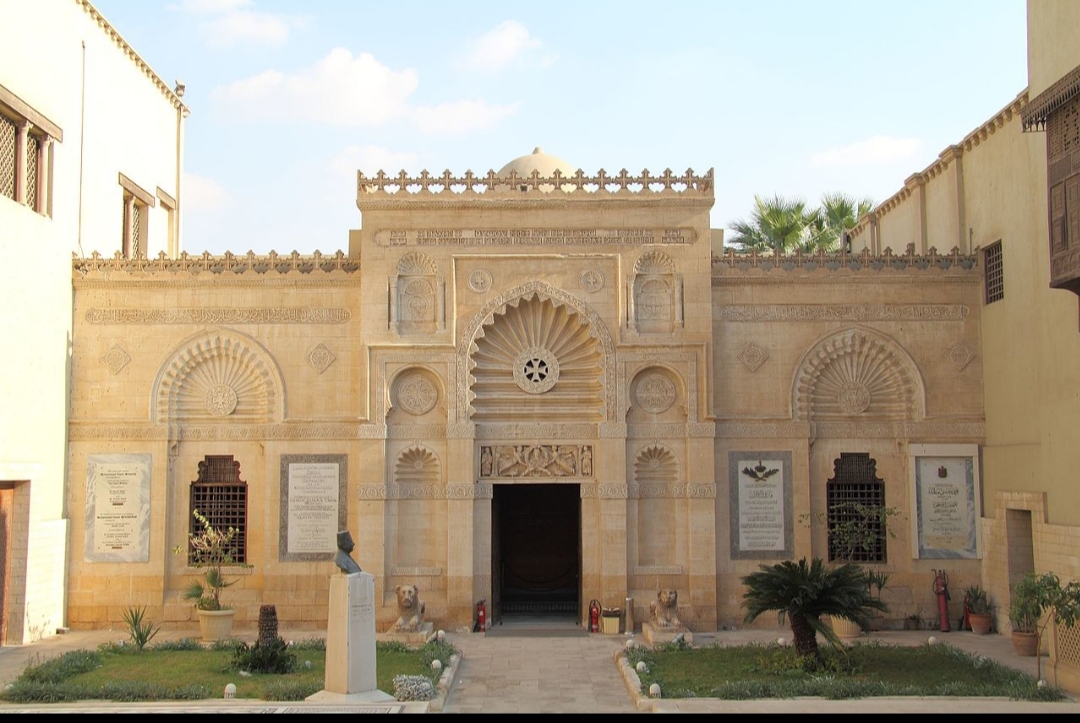
The Coptic Museum


The establishment of the museum This museum is located in ancient Egypt within the borders of the Fort of Babylon, whose remains are located behind the building of the museum; construction began during the Persians, but many additions occurred to it during the reign of the Roman empires Augustus and Trajan, then added to him who came after them from the Roman emperors. The French scientist (Maspero) played an important role in the establishment of the museum, as he worked on collecting Coptic art works and allocating a hall for them in the Egyptian Museum. Then, in 1893 AD, Marcus Pasha Samika called for the collection of the Coptic Antiquities to be included in the interests of the Committee for the Preservation of Antiquities and Arts. This man struggled for a long time to build the existing building of the museum, which opened in 1910 and was appointed its first director. The first museum guide was published in 1930.
Home Museum sections. This museum is the largest museum in the world for the antiquities of Egypt from the Coptic phase and it includes the following sections:
Stones and frescoes section.
Department of the development of Coptic writing and manuscripts.
Department of fabrics and textiles.
Ivory and Icons section.
Department of timber.
Department of Minerals.
Department of pottery and glass.
The most important museum collections. The number of holdings in the Coptic Museum is about 16,000. The museum’s holdings are arranged according to their qualities, into twelve sections. They presented a scientific presentation that took into account the chronological arrangement as possible, and we mention among the most important collections of the museum:
A limestone tombstone showing the overlap between the signs of the cross and ankh (end of the 4th century AD).
Textile fragment bearing some Christian symbols (6th century AD).
Ali comb of ivory showing some of the miracles of Jesus (7th century AD).
Limestone pillar crown decorated with grape clusters (7th century CE).
A bronze lamp with a crescent and cross handle (13th century AD).
The museum’s old wing houses a collection of wooden furniture and inlaid doors. It is noteworthy that it includes the door made of sycamore wood, bearing the icon of Saint Barbara Church . The panels are recognizable as they were installed in the Fatimid period during the eleventh and twelfth centuries.
The group resides in the new wing that shows various types, styles and themes, such as engineering designs, acanthus scrolls and grape leaves, friezes decorated with rabbits, peacocks, birds, and rural activities, passing through the Hellenistic and Coptic heritage to Islamic art formulas in Egypt. The Coptic Museum contains manuscripts of the Bible dating back thousands of years and is an architectural masterpiece.
The Coptic Museum was built to fill a gap in Egyptian history and art. The large collection of antiques, most of which are of great importance, to Coptic art in the world. [1]
The museum was built on the “Waqf” land belonging to the Coptic Church, which he willingly presented at the disposal of his founder, His Holiness the Honorable Kyrillos V [2] (he died in 1927 AD and was followed by Abu Anas 19th in 1929 AD) The Coptic Museum is located in a place of historical importance It is located within the walls of the famous Fortress of Babylon , which is considered one of the most famous and largest monuments remaining for the Roman Empire in Egypt, and its total area including the garden and the fortress is about 8000 m. It was developed with its old and new wings and the hanging church and then opened in 1984.
The Coptic Museum remained affiliated with the Coptic Patriarchate until 1931 and then became affiliated with the Ministry of Culture. The average daily number of visitors ranges from 200 to 250 individuals of different nationalities. Sources of.
The official site of the Coptic Museum in Cairo
The publication is a section of the manuscripts preserved in the Coptic Museum in Cairo
Coptic Antiquities and Arts page on Coptic Treasure

