
Dandara Temple Complex
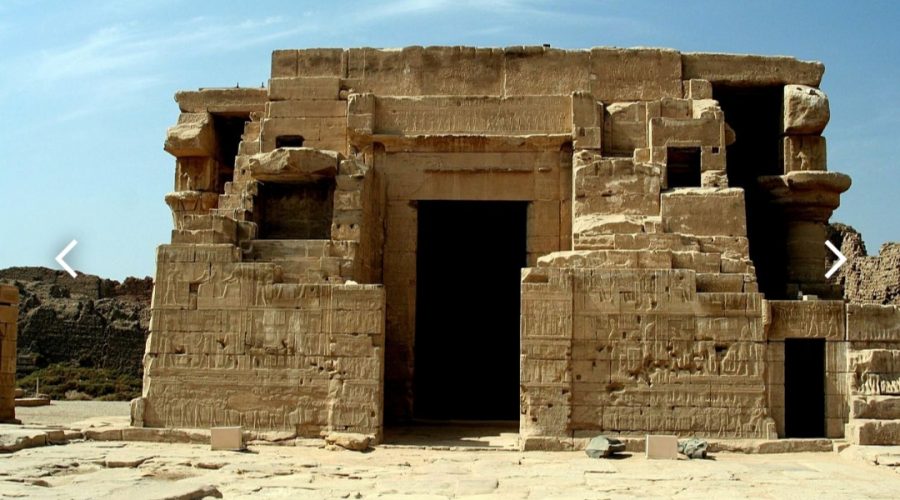
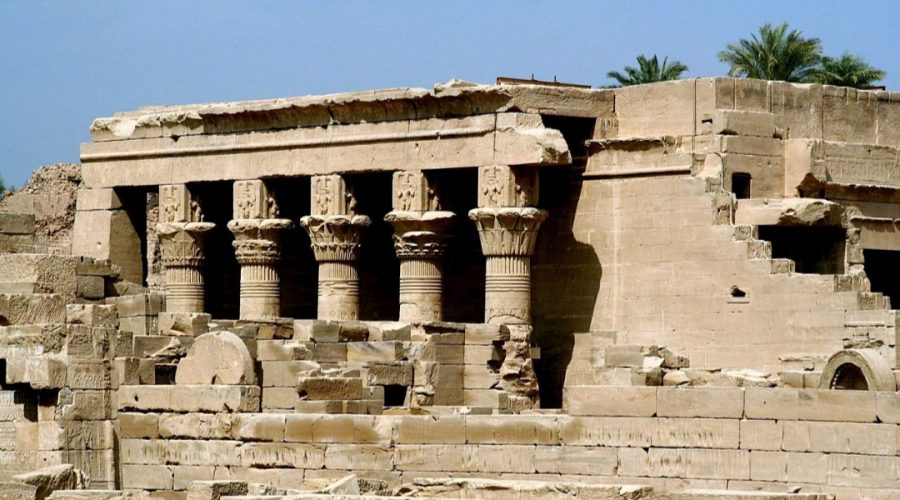
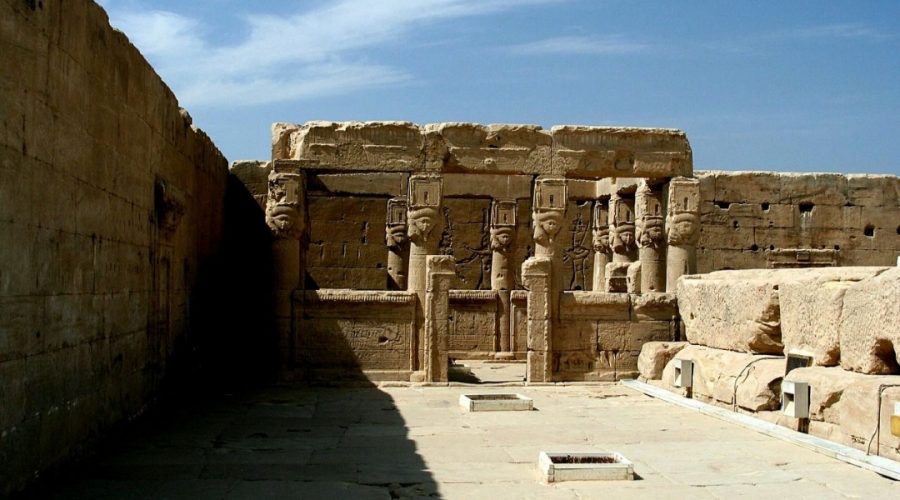
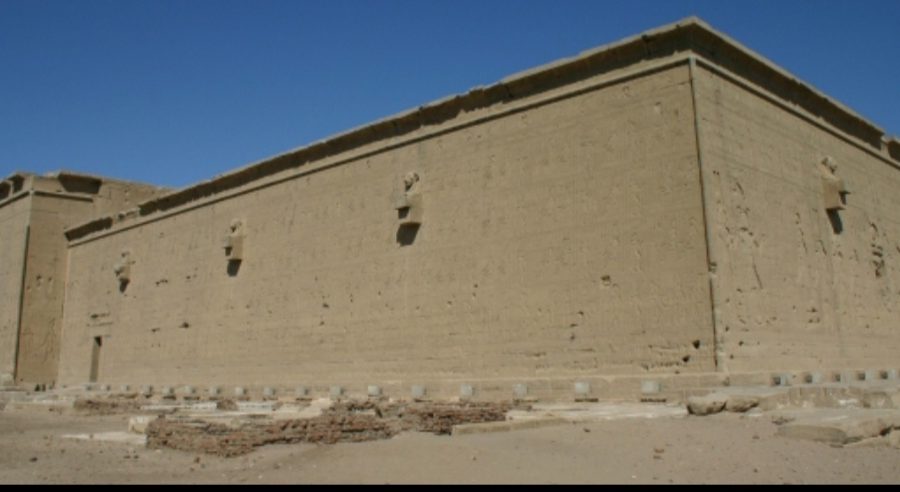
From the first moments of your entry to the nests of the Temple of Dandara, located on the western side, from the Nile River, opposite the city of Qena, the magic of the place attracts you, the fragrance of history takes you, and you are amazed by those sciences and arts, whose secrets are preserved by that temple whose construction work started at the end of the Ptolemaic era, and ended In the Roman era, it was dedicated to the worship of the goddess Hathor, the goddess of heaven, dancing and music, and the lady of happiness.
Archaeologists describe the Temple of Dandara as the Great Temple, as it is one of the most preserved Egyptian temples, as its bishop inscriptions, its walls and columns still remain in its colors, and it is the temple with two floors open to visit in front of tourists, even today.
Egyptologists say that the Temple of Dandara was built in pleasant isolation near the desert, and Dandara was the capital of the sixth region in Upper Egypt, and a late legend says that the drawing of the temple was inspired by ancient documents, dating back to the era of King Khufu and King Pepi I, and times Horus’s distant followers, as evidenced by that cemetery that was found near the wall of the temple, which confirms the ancient city of Dandara and chronicles its ritual worship.
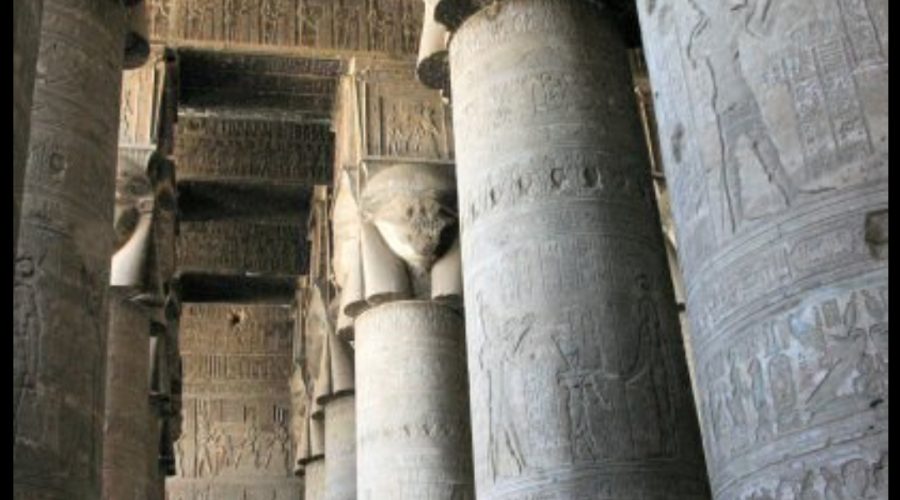
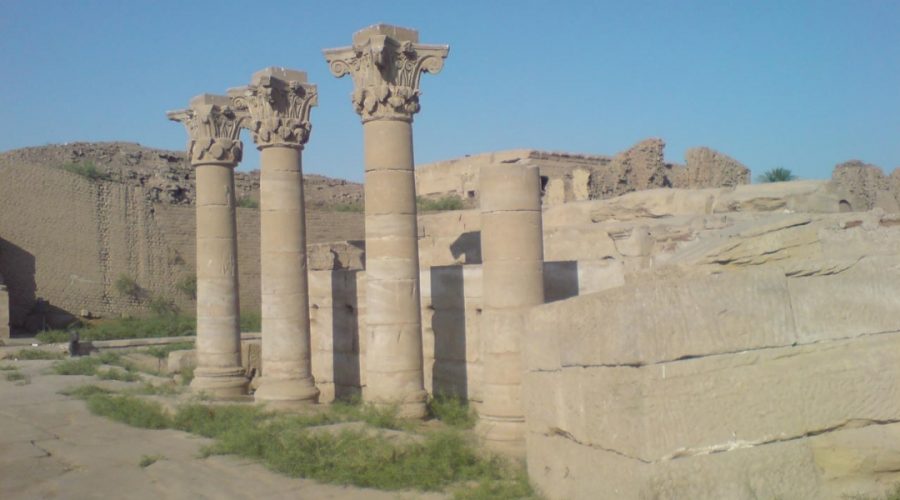
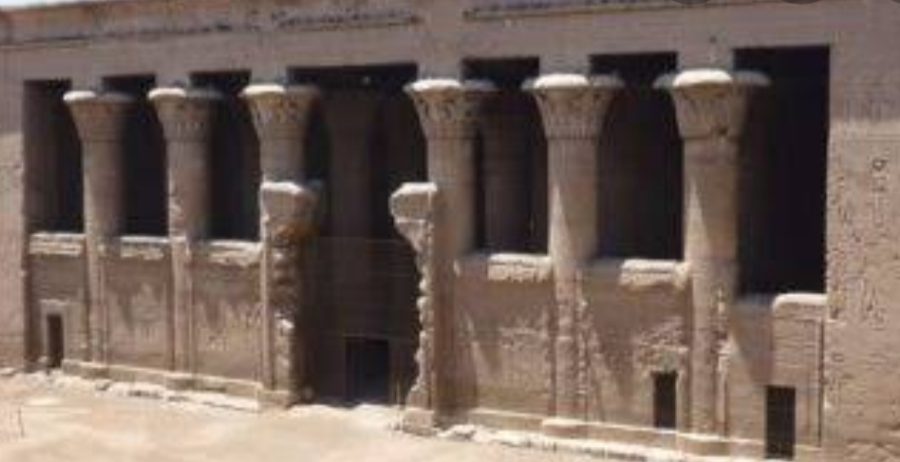
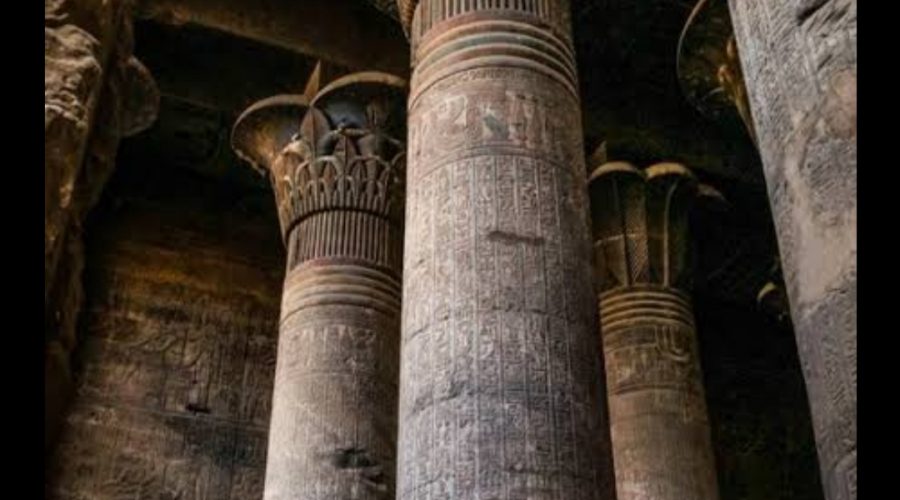
Once you enter the heart of the temple, you will find the 24-pillar hall, which is located in the grand roofed hall of the columns, which preserves the reliefs and colors of its roof, walls, and pillars until today, and it is the sculpted hall, to represent the “serum” with the symbols of the goddess Hathor, and represents a musical gift to it.
Many are the oddities of the Dandara temple, but the most notable are 32 narrow rooms, difficult to reach, because they were built inside the walls of the temple, and they are called secret rooms, which are ornate rooms, and were built on three levels, and the middle rooms can be reached, by means of enchanted doors, and perhaps these rooms were, for each A precious thing inside the temple, especially religious ritual tools, and there is another account that says that these rooms were prepared to receive some powers, which help God one day, to be born again.
As for the second floor of the temple, it contains an open mihrab between its facilities, where they were holding a celebration of the “union of the sun disk”, which was held at the temple on New Year’s Eve.
On the second floor of the Temple of Dandara, there is a mihrab at its roof, the first map of the sky, the stars, and the constellations, but there is none of that map except a casted copy – imitated – because the original map was transferred centuries ago to France, where it is now displayed at the Louvre Museum in Paris, and the map The celestial, which was found at the Temple of Dandara, confirms the ancient Egyptians’ relationship with astronomy, and enables them to possess many of its tools.
Perhaps these astronomical phenomena witnessed by many ancient Egyptian temples, among them the Temple of Dandara, from the perpendicularity of the sun and the moon, to the ingenuity of the ancient Egyptians, in astronomy and engineering.
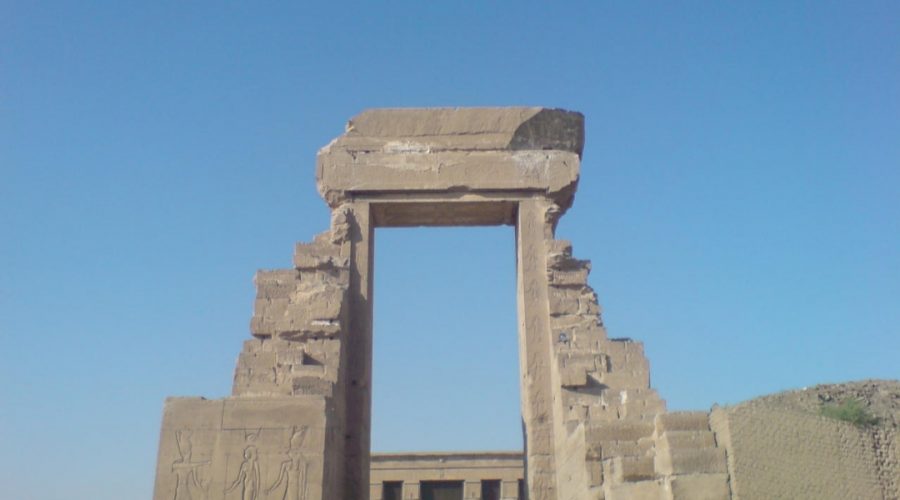
The visitor draws the attention of the Dandara temple, those artifacts, including statues, coffins, and carved panels. They were placed on platforms to the left of the entrance gate, which are recently discovered artifacts in the temple, and they are being collected and restored, searching for missing parts of them, and reassembling them again, to be displayed in their place The original, if it has a temple site, or is displayed in a museum exhibition hall, and most of those pieces that were found, are full pieces of reliefs and drawings.
The search, excavation, and restoration of the Temple of Dandara continues, in order to discover more of its secrets, some of which are still mysterious to this day.
It is known that the Temple of Dandara was built to worship the goddess Hathor, the companion of Horus, Light of Dandara
Dandara’s light , engraved on the wall of the temple and named after him, which many legends are told, one of which is that the Egyptians had the technology of lights and discovered electricity. The picture shows a lotus (the neolover) revealing a snake on the wall, and archaeologists have differed on its interpretation as before.
